Kruger National Park is South Africa’s great safari wilderness, and on its unfenced western edge, private reserves offer the most intimate way to explore it.
In the early 1990s, the fences came down along much of Kruger National Park’s western boundary. The park and the private reserves beside it became one vast, open wilderness, and elephants, lions and leopards have wandered freely between them ever since.
Kruger itself covers almost two million hectares of northeastern South Africa, running from the Crocodile River in the south to the Limpopo in the north. It is one of Africa’s great Big Five strongholds, and its tarred roads and rest camps make it a favourite for self-drive safaris.
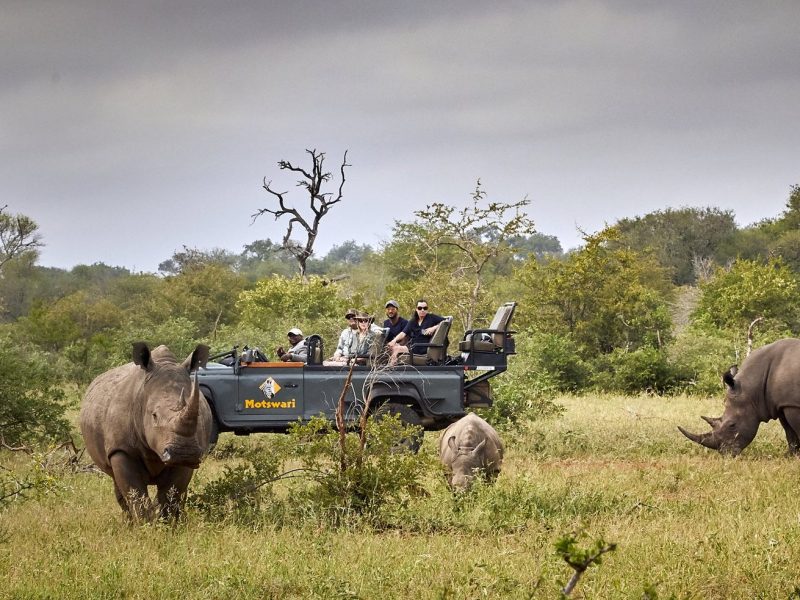
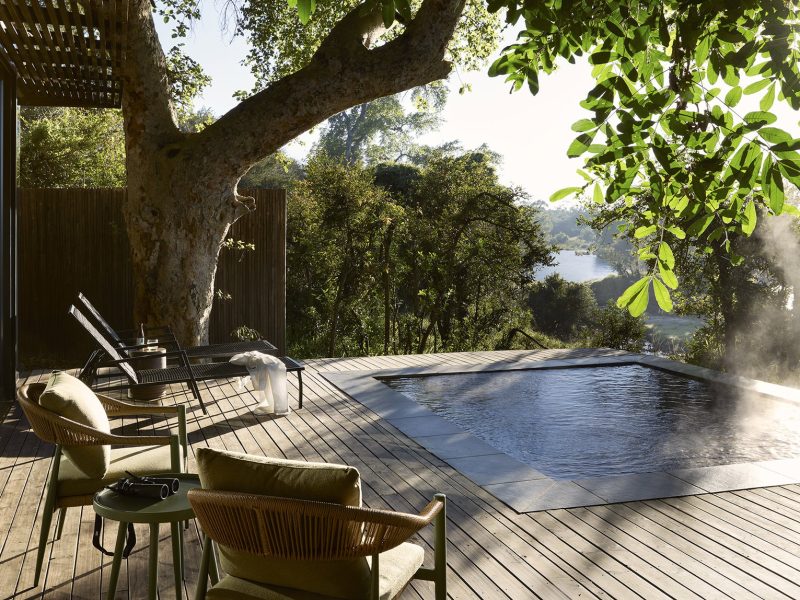
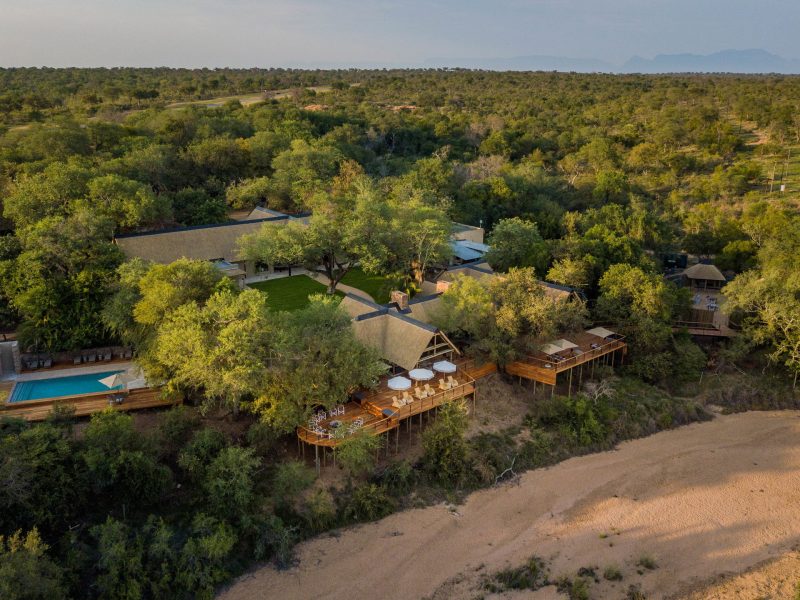
Our lodges and camps sit in the Greater Kruger, the private reserves on the park’s western side, where the experience is far more personal. Only lodge guests can use the reserve tracks, and each open vehicle carries just a handful of people. Rangers and trackers can head off-road to follow a leopard into the bush, and night drives and guided walks add a whole new dimension. A sighting is shared between a few vehicles over the radio, not a queue of cars.
Each reserve has its own character.
Sabi Sand: One of South Africa’s oldest private reserves, the Sabi Sand lies in the south-west, where the Sabie and Sand rivers flow through thick riverine bush. It is famous for leopards that have grown relaxed around vehicles, and it is home to Bush Lodge, Lion Sands River Lodge and Elephant Plains Game Lodge.
Timbavati and Umbabat: Further north, these quieter reserves are among the few places where white lions occur naturally, though sightings are never guaranteed. Motswari overlooks a dry riverbed here.
Thornybush: Close to Hoedspruit, Thornybush Nature Reserve owes its safari reputation to Thornybush Game Lodge, which has welcomed guests since 1961.
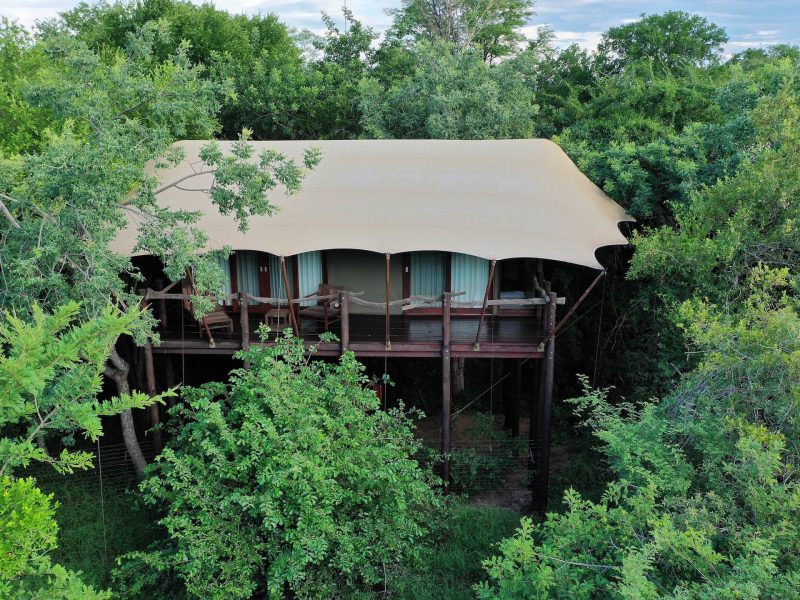
Kapama: Kapama Private Game Reserve lies between the Drakensberg escarpment and the Kruger, a short drive from Hoedspruit Airport. Kapama Buffalo Camp, its only tented camp, is here.
A few days in the Greater Kruger pairs beautifully with Cape Town and the Winelands or with a beach stay in Mozambique or Mauritius.
People lived in the Lowveld long before it became a park. San hunter-gatherers painted the rock shelters of the south-west, and Iron Age communities farmed, smelted metal and traded here for centuries. At Thulamela, a stone-walled hilltop settlement in the far north, archaeologists have found gold jewellery and glass beads from trade with the coast.
By the late 19th century, hunting had stripped much of the region of its game. In 1898, Paul Kruger, President of the South African Republic, proclaimed the Sabie Game Reserve between the Sabie and Crocodile rivers. James Stevenson-Hamilton became its first warden in 1902 and spent more than four decades building it into the park we know today. The Shingwedzi Game Reserve was proclaimed further north in 1903, and in 1926 the National Parks Act joined the two reserves and the land between them to create the Kruger National Park.
The park came at a cost to the people who lived there. Over the years, Tsonga and other communities were moved off their land to make way for it. In 1998, the Makuleke community won back land in the far north through a land claim. They chose to keep it under conservation, and it now earns them an income from tourism.
The first visitors’ cars arrived in 1927, and Kruger has grown into one of Africa’s best-loved parks. In 2002, it became part of the Great Limpopo Transfrontier Park, which links it with protected areas in Mozambique and Zimbabwe. The park celebrated its centenary in 2026.
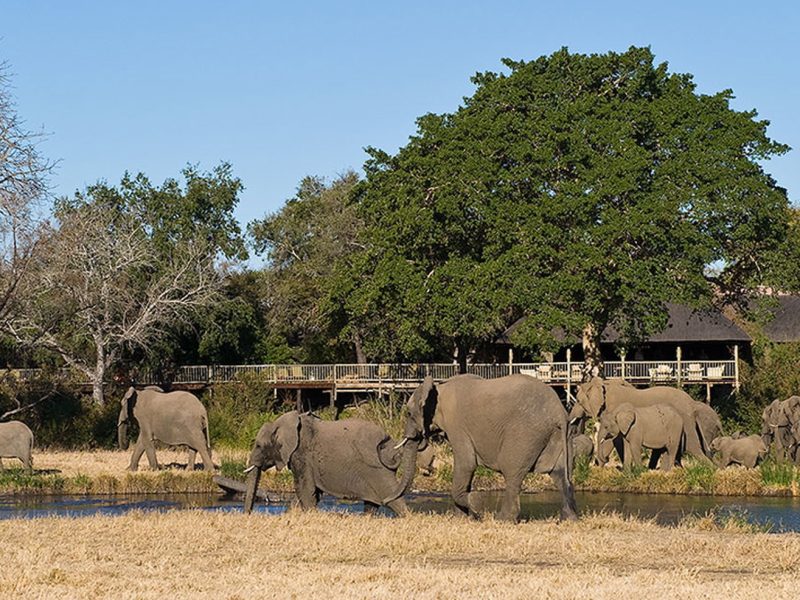
Kruger is home to 148 species of mammals, more than 500 species of bird and over 100 species of reptiles, so there is always something to watch. The Big Five draw most visitors. Recent SANParks surveys put the elephant population at close to 40,000, and the park holds around 1,300 lions. Buffaloes roam in herds that can run into the hundreds, and leopards are seen most reliably in the private reserves.
Look beyond the famous names too. Kruger is one of the strongholds of the endangered African wild dog, and cheetahs hunt on the open plains. Spotted hyenas raise their cubs in dens close to the tracks, and hippos and crocodiles crowd the rivers. Giraffes, zebra, kudu, wildebeest and great herds of impala fill the bush in between.
Birders are spoilt for choice. Southern ground hornbills stride through the grass, lilac-breasted rollers flash colour from the treetops and martial eagles scan the plains from above. From October, migrant birds arrive for the summer, adding even more variety.
Rhinos remain part of the Big Five here, although poaching has reduced their numbers, and protecting them is one of the park’s most important tasks.
Kruger is a year-round destination, and each season brings its own rewards.
Dry season (May to September)
This is the classic time for game viewing. With little rain, the grass dies back and the bush thins, making animals easier to spot as they gather around rivers, dams and waterholes. Days are mild and sunny, but early mornings and evenings can be cold, especially in an open vehicle, so pack warm layers, a hat and gloves.
Wet season (October to April)
Summer rains turn the bush lush and green. Thicker vegetation can make game harder to find, but this is when many antelope give birth, and the young draw predators close. Migrant birds arrive, and afternoon thunderstorms bring dramatic skies. Days are hot and often humid, regularly passing 30°C, so the early morning and late afternoon drives are the best time to be out.
Kruger lies in a malaria area, so speak to your doctor or a travel clinic about precautions before you go.
Game drives are the heart of a Kruger safari. In the private reserves, they set off at dawn and in the late afternoon in open vehicles with a ranger and tracker. Afternoon drives often pause for sundowners, then return by spotlight after dark, when genets, owls and hunting lions come out. Guided bush walks reveal the smaller details, from tracks and dung to the plants used in traditional medicine.
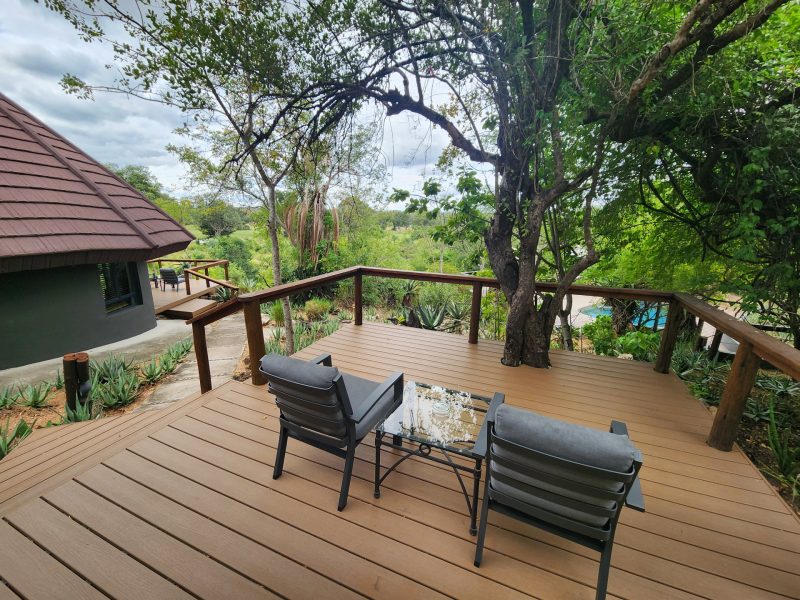
Lodges add their own touches. Depending on where you stay, you might enjoy a spa treatment between drives, breakfast in the bush or a night under the stars on a raised sleep-out deck. Some lodges run children’s programmes, while others are kept for adults and older children.
There is history to discover in the park too. San rock art decorates shelters in the southwest, and the Bushman Trail near Berg-en-Dal is one of the best ways to see it. The Iron Age sites of Masorini, near Phalaborwa Gate, and Thulamela in the far north reveal how people lived and traded here centuries ago.
Beyond the reserves, the Panorama Route makes a spectacular day out, with views over the Blyde River Canyon from God’s Window and the swirling rock formations of Bourke’s Luck Potholes. Around Hoedspruit, you can float over the bush on a hot air balloon flight, and golfers can play a round at Skukuza, the only golf course inside the park.
Kruger National Park lies in north-eastern South Africa, across Limpopo and Mpumalanga provinces. It covers 19,633 km², running around 350 km from north to south and roughly 60 km from west to east.
Rivers mark its edges. The Crocodile River forms the southern boundary and the Limpopo the northern one, where South Africa, Zimbabwe and Mozambique meet at Crooks’ Corner. To the east, the Lebombo Mountains trace the border with Mozambique. In between, the Sabie, Olifants, Letaba and other rivers flow eastwards across the park, lined with riverine forest of sycamore figs and jackalberry trees.
The landscape changes as you travel north. The south-west is hilly and densely wooded, while open grassland plains in the centre draw large herds of grazers. North of the Olifants River, mopane woodland takes over, and baobabs rise above the bush around Pafuri in the far north.
The private reserves of the Greater Kruger lie along the park’s western boundary, between Kruger and the Drakensberg escarpment, which rises steeply above the Lowveld near Hoedspruit.
Kruger National Park is part of a wider selection of SOUTH AFRICA holidays and accommodation.