A shimmering soda lake at the foot of the Rift Valley wall, ringed by spring-fed forest, flamingo shores and lions that rest in the trees.
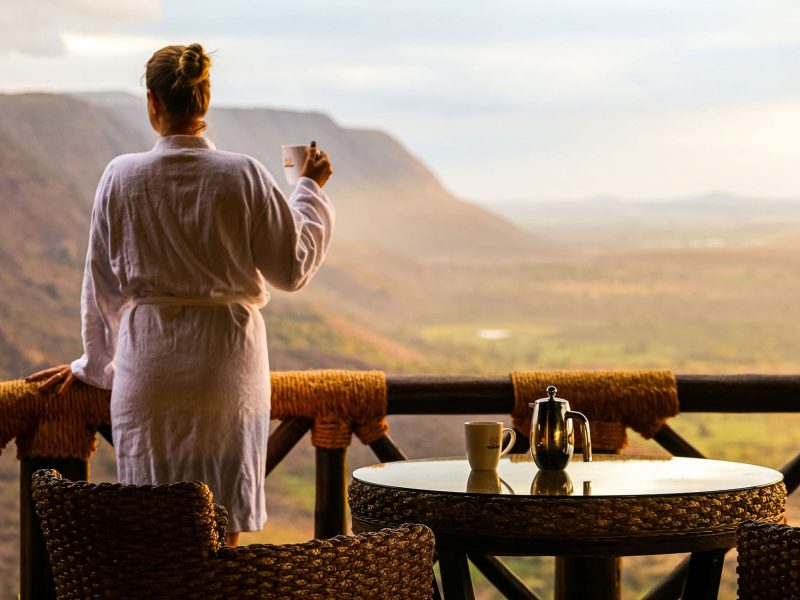
Lake Manyara is a park you see from above before you ever drive in. From the road that climbs the Rift Valley escarpment, the lake spreads out below in shades of silver and green, edged with forest and grassland.
At the foot of the cliffs, the park packs a remarkable variety into a small space. Springs seeping from the base of the escarpment feed a dense groundwater forest, where baboons, blue monkeys and elephants move between fig and mahogany trees. Beyond it, acacia woodland opens onto grassy floodplains grazed by buffalo, zebra and giraffe. The shallow lake draws pelicans and storks, and in the wetter months flamingos gather in their thousands. Then there are the lions, which have a habit of resting in the branches of acacias.
Lake Manyara sits on the road between Arusha and the Ngorongoro Crater, so many visitors stop for just a few hours. Stay a night or two nearby and you can head deeper into the quieter south of the park, where fewer vehicles venture.
Lake Manyara became a national park in 1960, making it one of the oldest in Tanzania. The wider area was later recognised by UNESCO as a biosphere reserve, protecting the lake, forest and escarpment together with the farmland around them. Ernest Hemingway travelled through northern Tanzania in the 1930s and described the lake as the loveliest he had seen in Africa.
The park’s gateway town, Mto wa Mbu, takes its name from the Swahili for “river of mosquitoes”. Streams running off the escarpment water its fields, and over the years this fertile farmland has drawn families from many parts of Tanzania. Today the town is known for its mix of cultures, its busy market and the banana plantations that line its lanes.
Lake Manyara’s mix of habitats means the scenery and wildlife change every few kilometres. In the groundwater forest near the entrance, large troops of olive baboons forage along the track while blue monkeys watch from the canopy. Elephants are often seen here too, and sometimes wade out into the shallows.
Further south, the woodland and floodplains hold buffalo, wildebeest, zebra, impala and Maasai giraffe, while hippos wallow at the hippo pool on the edge of the lake. Lions are found across the park, which is famous for prides that climb into acacia trees to rest in the shade. Leopards live here too, though they are rarely seen.
For birdwatchers, Manyara is one of the finest parks in northern Tanzania, with more than 400 species recorded. Look out for pelicans, yellow-billed storks, grey-crowned cranes and silvery-cheeked hornbills, as well as the lesser flamingos that turn the shoreline pink when the lake is full.
Dry season (June to October)
The bush thins out and animals gather near water, so wildlife is easier to find. Days are mostly sunny and dry, but early mornings can be chilly between June and August, so pack a warm layer for game drives. This is the busiest time of year, and by September and October the lake is lower and the tracks can be dusty.
Wet season (November to May)
The short rains usually fall in November and December, followed by a drier spell in January and February before the long rains from March to May. The park turns lush and green, the lake fills and migrant birds arrive, making this the best time for birdwatching and flamingos. Fewer visitors mean quieter tracks, and some lodges offer lower rates, particularly in April and May.
Most visitors explore Lake Manyara on a game drive with their driver-guide, often pausing for a picnic lunch overlooking the lake. With a little more time, there is plenty more to discover.
Near the park entrance, a treetop walkway, the first in Tanzania, winds for around 370 metres through the forest canopy, putting you at eye level with blue monkeys and hornbills. Manyara is also one of the few parks in Tanzania where night drives are permitted, a chance to look for genets, civets, porcupines and bush babies after dark. When water levels are high enough, a gentle canoe trip lets you glide past pelicans and flamingos while hippos keep a watchful eye.
Outside the park, Mto wa Mbu is well worth a stop. A guided walk or bike ride takes you through banana plantations and rice fields to the busy market, with the chance to taste local food and pick up a hand-carved souvenir.
Lake Manyara National Park lies in northern Tanzania on the floor of the Great Rift Valley. To the west, the escarpment rises steeply above the park, while the shallow soda lake fills much of its area, growing and shrinking with the seasons.
The park sits between the Ngorongoro highlands to the northwest and Tarangire National Park to the southeast. Wildlife corridors link it with Tarangire, so elephants and other animals can move between the two.
Most travellers fly into Kilimanjaro International Airport and travel on via Arusha. From Arusha, the park entrance is about 115 km by road, around two hours’ drive. Lake Manyara also has its own airstrip, with light aircraft flights connecting it to Arusha and the Serengeti.
Manyara is part of a wider selection of TANZANIA holidays and accommodation.