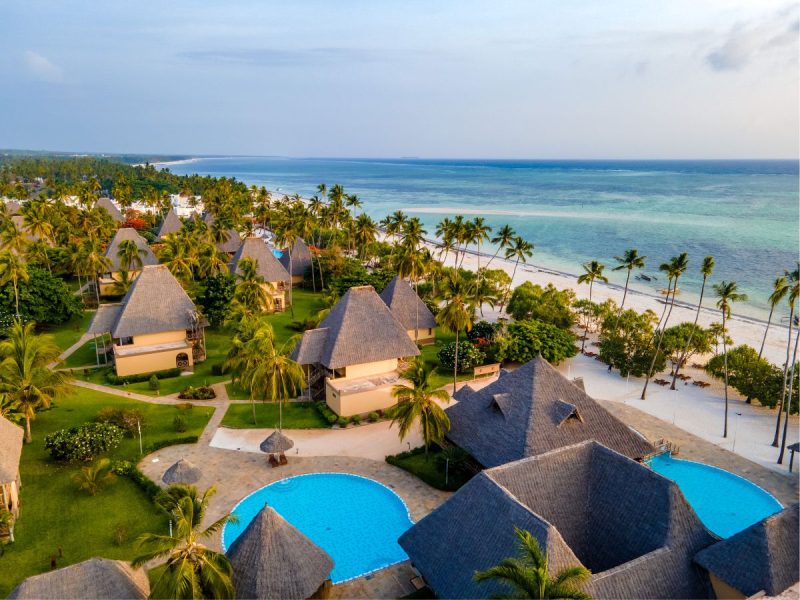
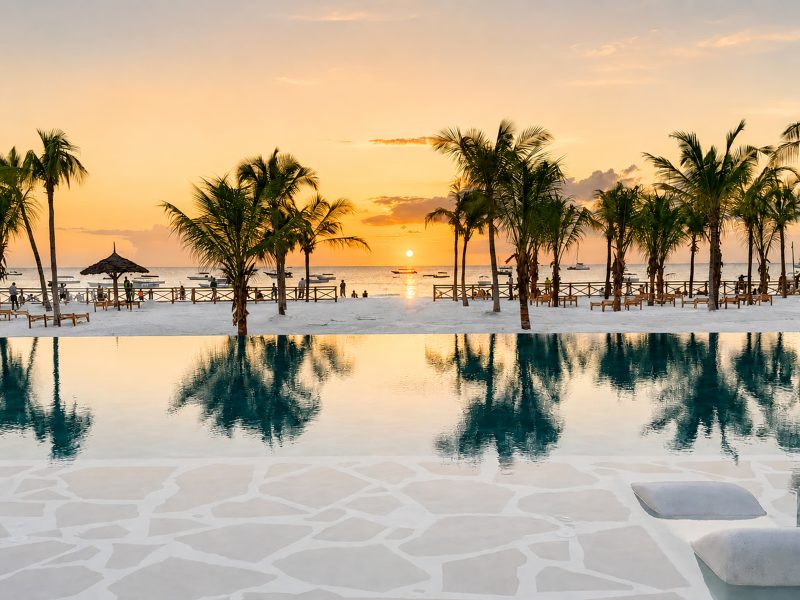
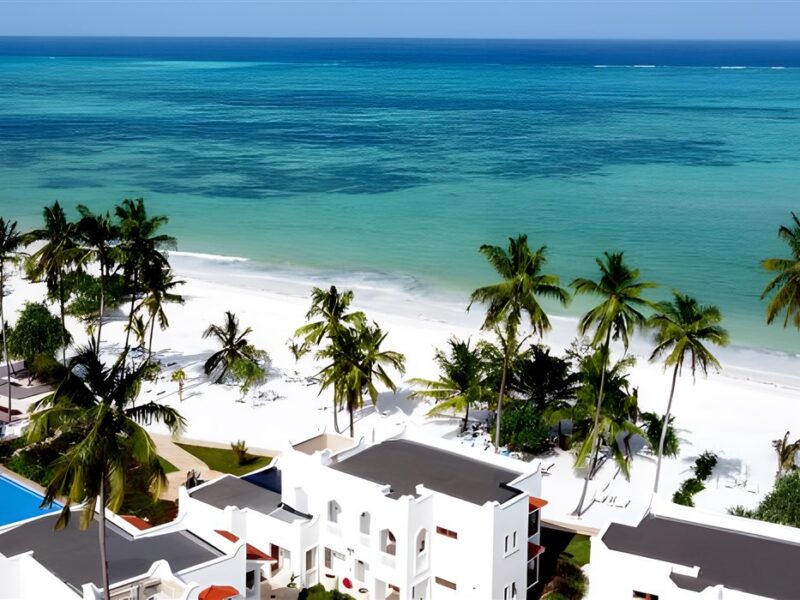
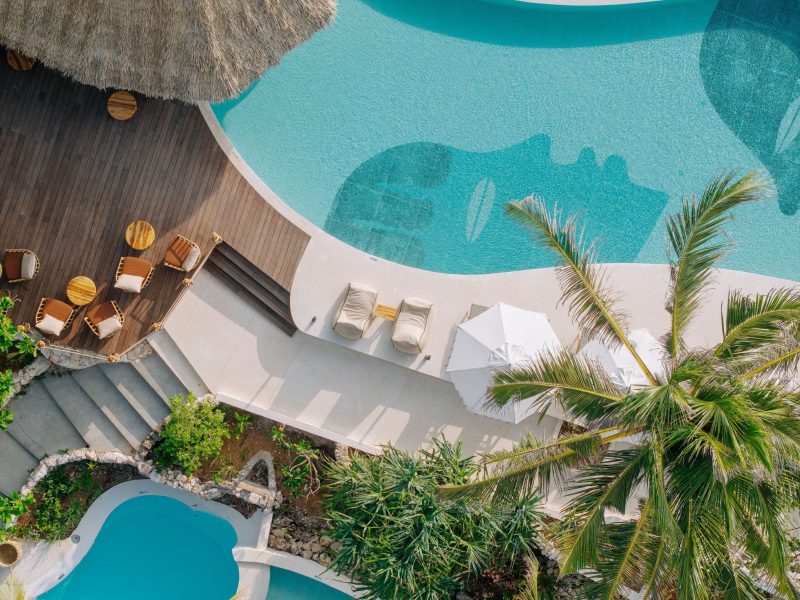
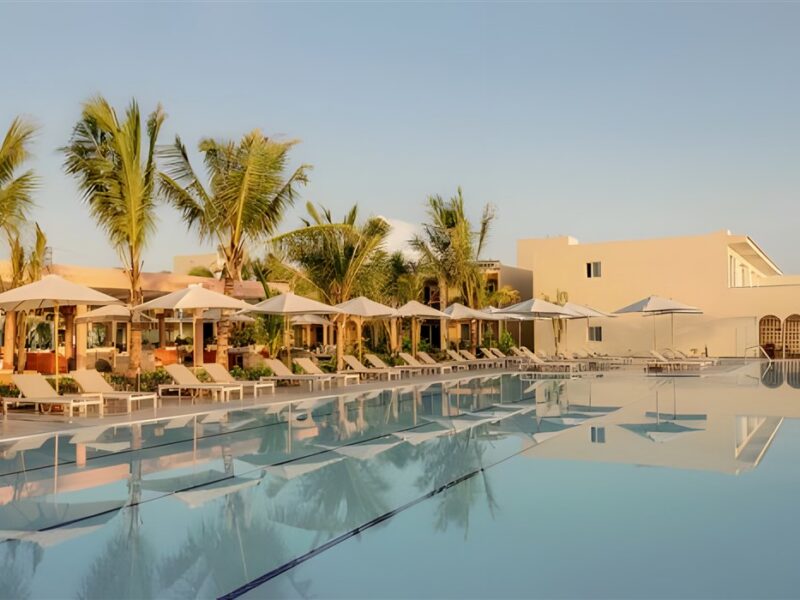
From Nungwi’s sunsets to the tidal lagoons of the northeast coast, Zanzibar’s palm-lined beaches each have a character of their own.
On Zanzibar, the stretch of coast you choose shapes your days. In the north, Nungwi’s beaches stay swimmable at almost any tide and face the sunset. Along the northeast and southeast coasts, the Indian Ocean slips far out at low tide, revealing lagoons, rock pools and seaweed farms.
Zanzibar is an archipelago of around 50 islands off the coast of Tanzania, and most visitors stay on Unguja, the main island. Its beaches are fringed with coconut palms and powder-soft coral sand. Fishing villages such as Matemwe, Pwani Mchangani and Jambiani sit right beside the resorts, wooden dhows set sail each morning, and at Nungwi you can still watch them being built by hand.
Offshore, Mnemba Atoll is the island’s most celebrated spot for diving and snorkelling, and the water stays warm all year. Inland, Jozani Forest shelters the rare red colobus monkey, and the spice farms reveal how cloves, cinnamon and nutmeg are grown. Stone Town, the historic heart of Zanzibar City and a UNESCO World Heritage Site, deserves a day or a night of its own. After a safari on the mainland, the pace of Zanzibar is the ideal way to slow down.
Short dry season (January to February)
January and February are hot and largely dry, with temperatures often above 30°C and the odd afternoon shower. Humidity is high, especially in Stone Town, but sea breezes keep the beaches comfortable. The island is busy over New Year, then quietens down, so later January and February can be good value. Northeast winds make this a popular time for kite surfing, and Stone Town hosts the Sauti za Busara music festival each February.
Long rains (March to May)
The long rains usually arrive in March, and April is the wettest month of the year, with heavy downpours and tropical storms. Roads can flood, and some hotels close for a break or refurbishment. Diving is at its least reliable, as runoff clouds the water. By late May the rain eases and temperatures settle at around 25°C. Prices are at their lowest, so it can suit travellers who don’t mind the odd stormy day.
Long dry season (June to October)
This is the most popular time to visit. Days are warm, dry and sunny, with temperatures of around 25°C to 30°C. July and August coincide with the European summer holidays, so beaches and hotels can be busy and it’s wise to book well ahead. September and October are a little quieter, and the calm seas bring some of the year’s best diving and snorkelling around Mnemba. Film lovers can catch the Zanzibar International Film Festival in Stone Town each July.
Short rains (November to December)
The short rains usually begin in November and run into December, although the timing varies from year to year. Showers are generally lighter and shorter than during the long rains, and the weeks before the festive season are quieter and good value. Christmas and New Year are among the busiest times of the year, with many hotels fully booked, so it pays to book early.
Good to know
Most Zanzibaris are Muslim. During Ramadan, whose dates change each year, many restaurants and bars in Stone Town stay closed until sunset, although resort life carries on much as usual.
Zanzibar’s diving suits are for beginners and experienced divers alike. Mnemba Atoll, off the northeast tip of the island, has gently sloping reefs that are ideal for first-timers and snorkellers, while seasoned divers can try wall, drift and night dives. The water averages around 27°C all year, and on a clear day visibility can stretch beyond 30 metres. In deeper water, barracuda, kingfish, tuna and wahoo hunt alongside Napoleon wrasse, manta rays and reef sharks. The shallows belong to shoals of colourful tropical fish.
Above the waves, a sunset cruise on a traditional dhow is a Zanzibar classic. Boat trips run out to Prison Island, home to a colony of Aldabra giant tortoises, and you can look for dolphins off Kizimkazi on the south coast or visit the turtles at Nungwi. From December to February, steady northeast winds draw kite surfers to the southeast coast and the Michamvi Peninsula.
On land, a guided walk through Stone Town leads past carved wooden doors, bustling markets and the site of the old slave market beneath Christ Church Cathedral. Spice tours visit the farms that earned Zanzibar its Spice Island name, and Jozani Forest is the place to see red colobus monkeys up close.
Each coast has its own rhythm. Nungwi and Kendwa in the north are lively, with swimming at almost any tide and the sun setting over the sea. The northeast beaches of Matemwe, Pwani Mchangani and Kiwengwa are quieter, and the closest to Mnemba. Further south, Uroa, Bwejuu and Jambiani are strongly tidal. At low tide the ocean retreats across the sand, which is the perfect time to stroll out towards the reef and watch the seaweed farmers at work.
Zanzibar is part of a wider selection of TANZANIA holidays and accommodation.